Still Deciding on Your Fit?
Every pair ships free across Europe and comes with 30-day free returns — full refund if the fit is wrong.
Take a minute to match the right width and arch support to your foot condition.
Every pair ships free across Europe and comes with 30-day free returns — full refund if the fit is wrong.
Take a minute to match the right width and arch support to your foot condition.
After surgery on the foot, the shoe stops being a style question. Swelling, bandaging and a reduced range of movement decide what can go on at all, and the usual answer is a shoe that skips laces entirely.
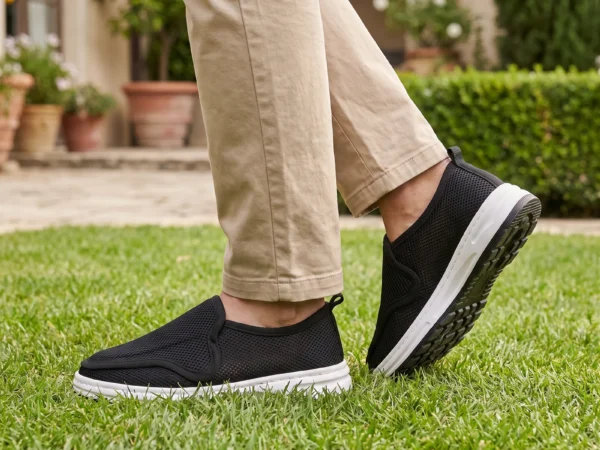
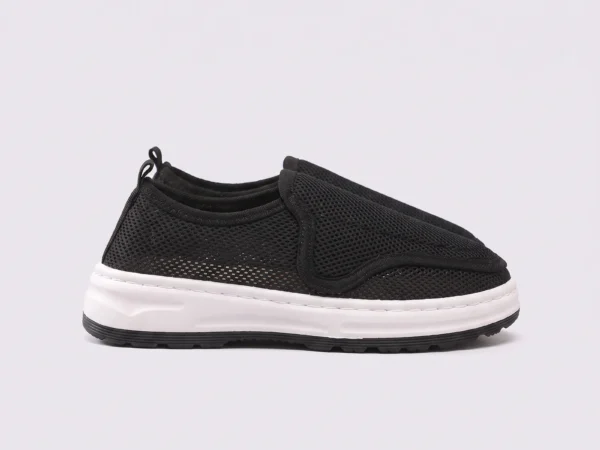
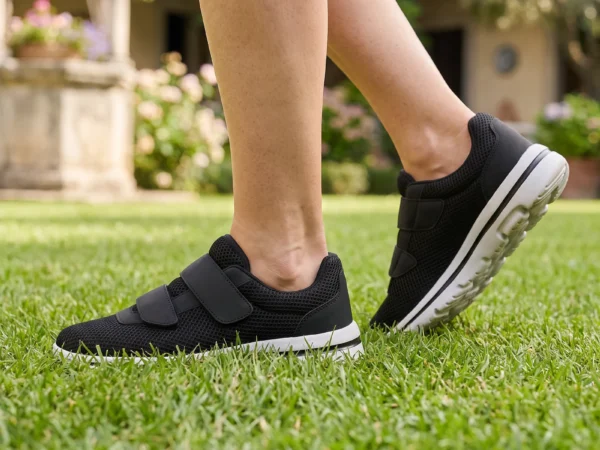
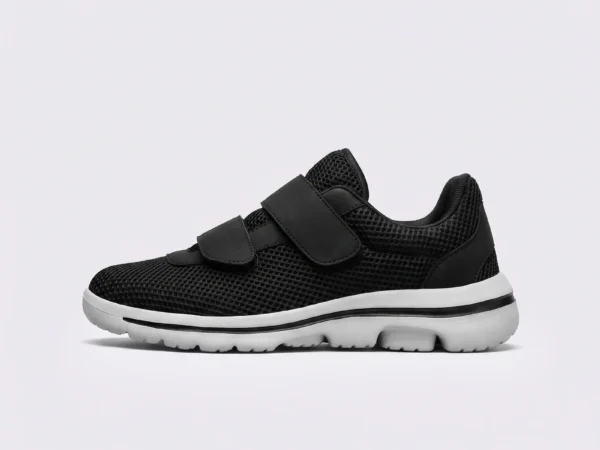
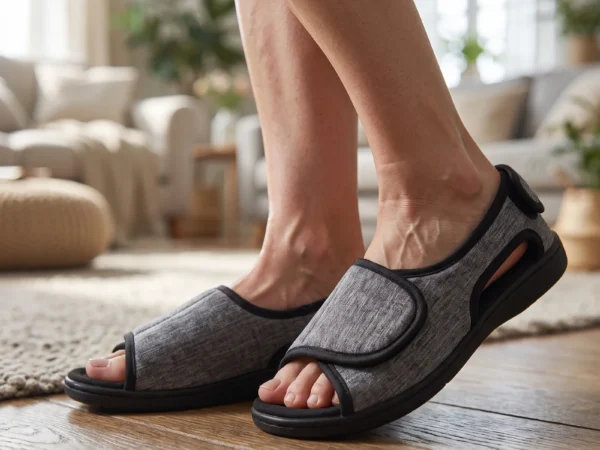
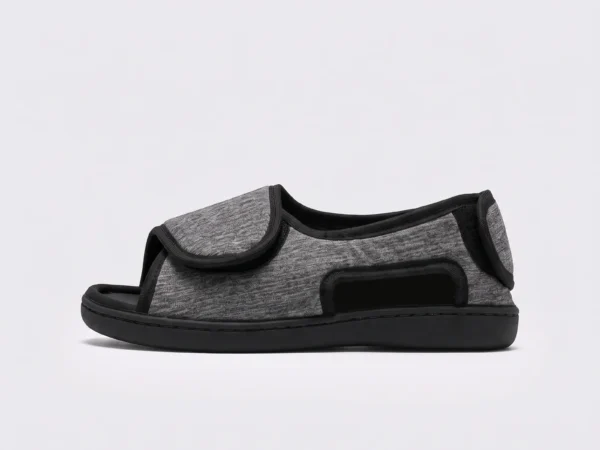
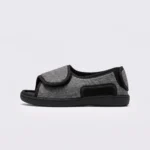
These styles are selected for exactly that: wide openings that clear the foot without bending down, hook-and-loop and elastic closures, soft stretch uppers that do not press on healing areas, and removable insoles that let a clinician adjust what is underneath.
Three constraints drive the design. The foot cannot be forced into a closed upper, so the opening has to be wide. Bandages change the shape of the foot week to week, so the closure has to be adjustable rather than fixed. And skin in a healing area cannot rub, so the interior has to be lined and free of seams that cross the instep.
Whether you can bear weight, whether the heel needs to be raised, and whether a specific insole or an insert is needed are all clinical questions. Ask before you buy, and ask whether the shoe should be on the affected foot or the other one. Any answer that depends on the specific procedure is worth having in writing.
Roomy, not loose. A post-surgery shoe should hold the foot gently without any pressure on the affected area, and the closure should let you adjust it as swelling changes through the day. If you can put two fingers at the front, that is a reasonable starting point. Wide-fit styles in this collection are the ones designed with that room built in.
Only if your surgeon or podiatrist says so. What is appropriate in the first days is often not right in the third week, and the decision belongs to your clinician, not to a shoe shop.
These styles are designed with extra room in the forefoot and adjustable fastenings, because swelling is the norm in the early weeks. Measure the foot late in the day, when it is at its largest, and size for that.
Some styles here have a rocker profile and some have a flat sole. Which one is right depends on the procedure, so check with your clinician and read the sole description on the product page.
If your foot shape has changed suddenly, one foot is becoming swollen, or you have reduced sensation, seek advice from a podiatrist before choosing footwear. Footwear is one part of everyday foot comfort — it is not a treatment.